
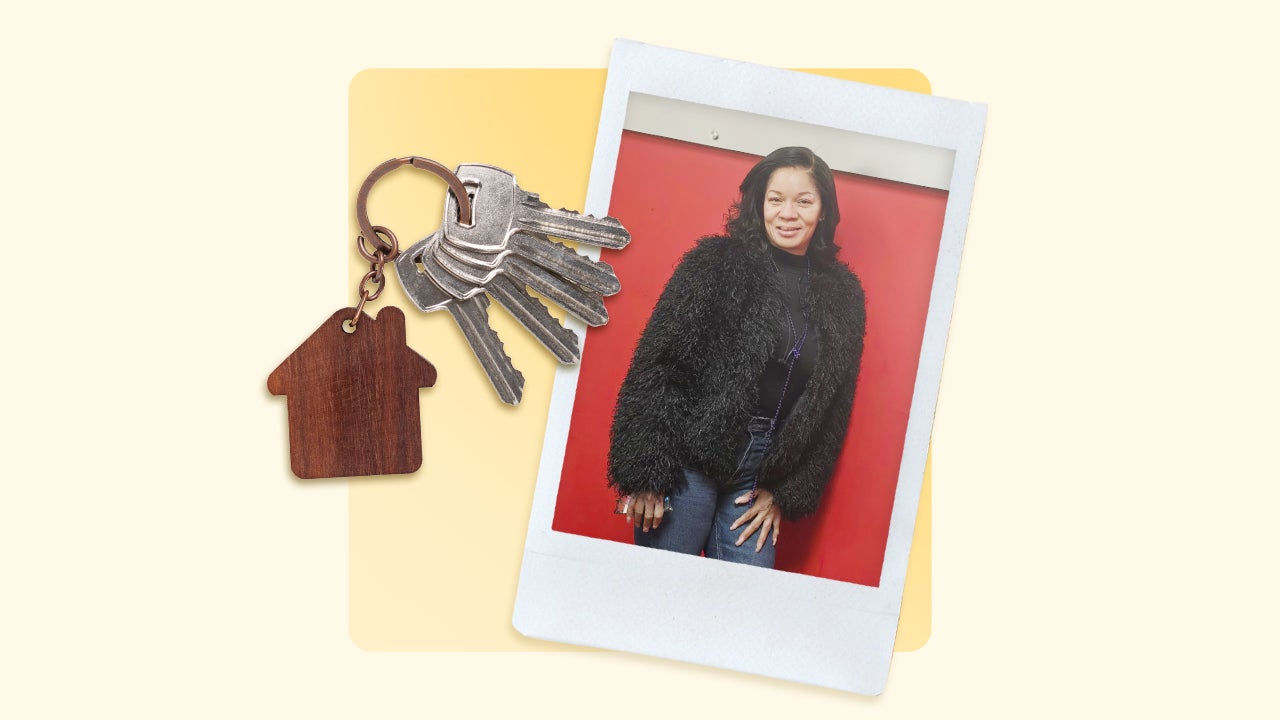

Illustration by Hunter Newton/Bankrate
Ayesha Garnett is defying the housing market’s grim math. A housekeeper in Philadelphia, Garnett says she doesn’t make much, but she’s smart with what she’s got. “I’m a saver,” she says. “[My salary] takes care of me and what I need to get done.” But there was one goal on the 52-year-old’s ‘must-do’ list that she wasn’t sure she could do all on her own — buy a house.
Setting the scene on homebuying
Buying a home is already a challenge for those earning the median income: Bankrate found that those earners are effectively priced out of three out of every four homes on the market. For lower-income earners, the climb to homeownership is even steeper.
Although Philadelphia offers a larger share of median-priced homes compared to other major cities, rising prices still squeeze hopeful buyers. Redfin reports that, in January 2026, median home prices in Philadelphia jumped 12.5% over the previous year. That nearly-$30,000 surge can mean months or even years more of saving up. For Garnett, it would have meant another year or two in Section 8 housing while she got her finances in ready-to-buy shape.
When you’re working with a limited income and soaring home prices, every dollar counts. Getting a lower mortgage rate can help make homeownership more affordable over time. Comparing rates on an online marketplace like Bankrate can help borrowers find rates up to a percentage point lower than the national average, which snowballs into thousands in savings over the life of a mortgage.
While online marketplaces offer one path to savings, for Garnett, navigating the homeownership landscape required a more personal starting point.
Behind her homebuying experience
Garnett’s homeownership journey began with a friend rather than a bank, who drove her to the Neighborhood Assistance Corporation of America office on Delaware Avenue and encouraged her to consider the program. She knew Garnett wanted a house and had heard good things about NACA — getting Garnett through NACA’s front doors ended up being a life-changing decision.
The homebuying process with NACA looks different than the conventional route. Unlike a traditional bank loan that relies on high credit scores and a 20% down payment, NACA uses “character-based” lending to eliminate the typical financial barriers to entry. The program allows buyers to close with $0 down and $0 in closing costs, while completely waiving the monthly private mortgage insurance (PMI) fees that usually accompany low-equity loans. NACA partners with Bank of America to offer qualified borrowers below-market interest rates.
Though enrolling in NACA offers its perks, it is far from a handout. In reality, the program is a rigorous, earned path to homeownership that requires a level of financial discipline most traditional mortgages never ask for. Once she enrolled in NACA’s program, Garnett says she didn’t buy anything but the bare necessities for a year to prepare for the costs of owning a home. “I cried many a night,” she reflects, but she says the sacrifice was worth it for her. The process was demanding and the stress took a physical toll. Garnett says she lost nearly 20 lbs and a few inches of hair during the buying process. “But, I’m okay now because I have a house,” she laughs.
After getting approved for a loan, Garnett got the keys to her Philadelphia townhome on February 13th, 2026. Though NACA was instrumental in helping Garnett see her closing day, there are also federal, state and nonprofit programs that specialize in helping people become homeowners.
An expert’s take
Rising home prices in Philadelphia have driven a wave of buyers to NACA, according to housing counselor Kenisha Griffin. “The cost of living is going up, and people’s incomes aren’t necessarily keeping pace,” she says. While anyone can enroll in one of NACA’s workshops, the organization specializes in helping low to middle-income earners become homeowners.
“We focus on being able to assist them without using a credit score and just going by their payment history and character,” says Griffin. “Its enabled a lot of people to purchase homes.”
Her homeownership dream
Garnett hasn’t fully furnished her new home yet. For the moment, she has only the essentials: a bed, a fridge and a TV. However, the lack of furniture doesn’t bother her; she’s happy to finally be home.
The house isn’t just for her. Even though she lives alone, Garnett knows her children are the true beneficiaries of her hard work. She wants to leave them more than just memories; she wants to leave them a legacy of financial stability. “I’m showing them how to do things, how to be smart and responsible with your money,” she says. “You can have what you want, you just got to really work for it.”
I can’t even describe this feeling. It’s just pure joy.
— Ayesha Garnett
Why we ask for feedback
Your feedback helps us improve our content and services. It takes less than a minute to
complete.
Your responses are anonymous and will only be used for improving our website.
Help us improve our content
Read the full article here