
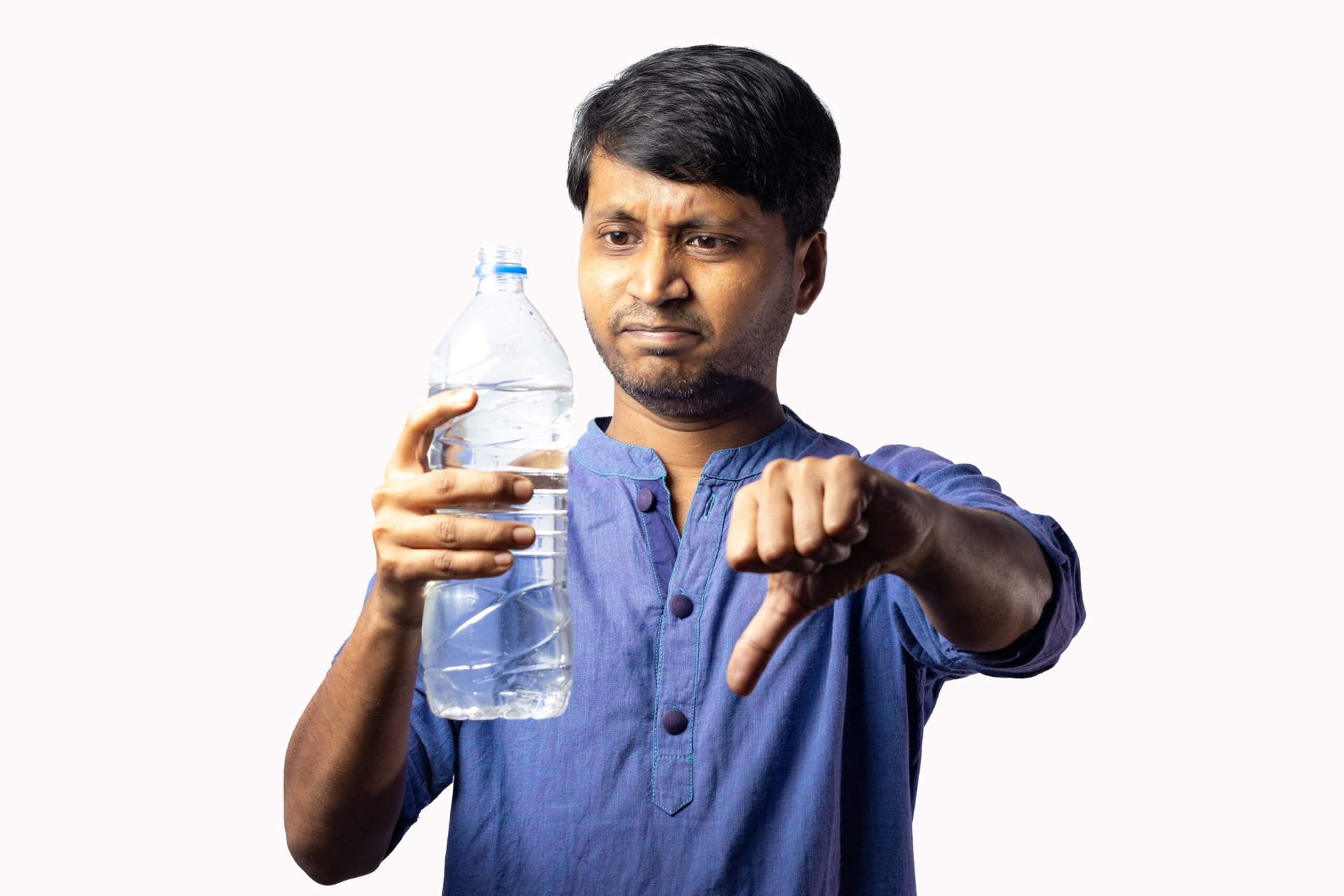

I was just reading a report in The Washington Post that asks a question that shouldn’t need to be asked: “Should you drink bottled water or tap?”
Since I wrote my first book, “Life or Debt,” about 25 years ago, I’ve been telling anyone who will listen that bottled water is one of the greatest marketing scams of the last century.
We’ve been trained to fear the water coming out of our kitchen faucets — which we already pay for — in favor of plastic bottles that cost 2,000 times more.
If the financial stupidity of paying for water isn’t enough to convince you, maybe the latest science will. It turns out that “pure” bottled water isn’t just expensive. It’s effectively a plastic soup.
Here’s why you need to ditch the disposable bottles for good.
1. You’re drinking plastic
For a long time, we thought bottled water was cleaner than tap. Marketing campaigns featured pristine mountain springs and glaciers to drive this point home.
But recent technology has allowed scientists to look closer, and they didn’t like what they found. A groundbreaking study from Columbia University discovered that a liter of bottled water contained about 240,000 tiny plastic fragments, called microplastics.
Microplastics are less than five millimeters big — about one-eighth of an inch.
These fragments break down further into nanoplastics that range in size from one nanometer to one micrometer. (One single human hair is 20 to 200 micrometers, for perspective.) Nanoplastics are so small they can pass through your intestines and lungs directly into your bloodstream.
Where do they come from? The bottle itself. Every time you squeeze the bottle or twist the cap, microscopic bits of plastic shear off into the water.
If you exclusively drink bottled water, you could be ingesting tens of thousands more plastic particles every year than someone who drinks from the tap.
2. The markup is criminal
Let’s look at your wallet. If you buy a fancy 20-ounce bottle of water at the gas station for $1.50, you’re paying nearly $10 per gallon. Even if you buy in bulk at the grocery store, you’re paying significantly more than you should.
The average cost of bottled water is roughly $1.22 per gallon.
The average cost of tap water? Less than one penny per gallon.
If you drink the recommended eight glasses a day, switching to tap water could save you hundreds — or for a family of four, more than $1,000 — every single year.
Imagine if a gas station opened across the street selling gasoline for 1 cent per gallon, but you insisted on going to the station charging $10 per gallon because you liked the logo better. That is exactly what you’re doing when you buy bottled water.
3. Tap water is often safer
There is a persistent myth that bottled water is safer than tap water. In the U.S., that’s generally false.
Tap water is regulated by the Environmental Protection Agency (EPA), which enforces strict safety standards and requires utility companies to publish annual Consumer Confidence Reports that detail exactly what’s in your water. You can look yours up right now.
Bottled water, on the other hand, is regulated by the U.S. Food and Drug Administration (FDA) as a food product. The FDA’s inspection regime is less frequent, and according to the EPA, it doesn’t require companies to share the same level of detailed testing data with the public.
In many cases, the water in the bottle is just tap water that has been run through a filter and marked up 2,000 times.
4. The taste excuse is easily fixed
I hear this all the time: “But Stacy, my tap water tastes like a swimming pool.”
I get it. Chlorine is used to kill bacteria in municipal water, and it leaves a taste. But you don’t need to buy a pallet of plastic bottles to fix it.
- The pitcher method: Buy a simple filtered pitcher for your fridge. It removes the chlorine taste and costs a fraction of what you spend on bottled water.
- The faucet filter: Attach a filter directly to your tap.
- Under-sink systems: For a larger upfront investment, you can install a reverse osmosis system that gives you water cleaner than anything you’d buy in a store.
5. We’re drowning in waste
I focus on money, but we can’t ignore the mess we’re making. Americans buy billions of plastic water bottles every year.
Only a fraction of them get recycled. The rest end up in landfills or the ocean, where they break down into the very microplastics that are now showing up in our bloodstreams.
What to do now
Stop letting marketing executives scare you into opening your wallet.
- Find your report: Search online for your local water utility’s Consumer Confidence Report to verify your tap water is safe. (As an example, here’s the water quality report from Fort Lauderdale, where I live.)
- Buy a filter: If you hate the taste of your tap water, spend $30 on a high-quality pitcher or filter.
- Get a reusable bottle: Buy a stainless steel or glass bottle that won’t shed plastic into your drink.
Read the full article here